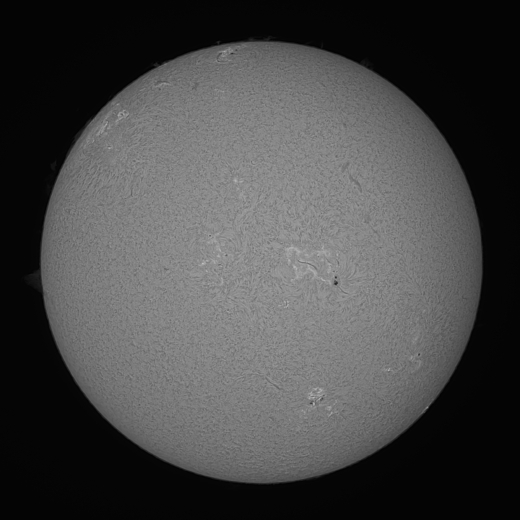
Giant sunspot complex 4317 centered. Earth-orbiting satellites recorded a strong M5-class solar flare: image. It came from a developing active region near new sunspot 4323. This region near the sun’s eastern limb seems poised forContinue reading
Category: Object type
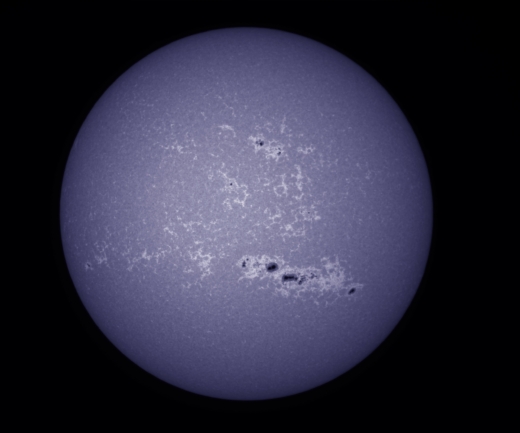
Sun in Ca II K light, 7 December 2025
Giant sunspot complex 4294 – 4296 has a ‘beta-gamma-delta’ magnetic field that harbors energy for X-class solar flares (Credit: NASA/SDO).
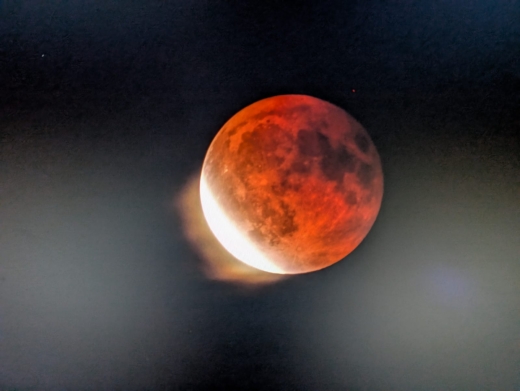
September 2025 lunar eclipse
A total lunar eclipse occurred at the Moon’s ascending node of orbit on Sunday, September 7, 2025, with an umbral magnitude of 1.3638. Viktor and Christian were able to take photos in Wulkaprodersdorf.

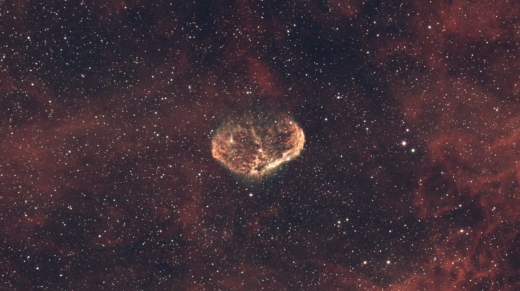
NGC 6888 – Crescent nebula 60 min
NGC 6888, the Crescent Nebula is an emission nebula in the constellation Cygnus, about 5000 light-years away from Earth. This 60 minute capture was taken with Takahashi FSQ106, ASI 585 MC pro and Optolong filter.
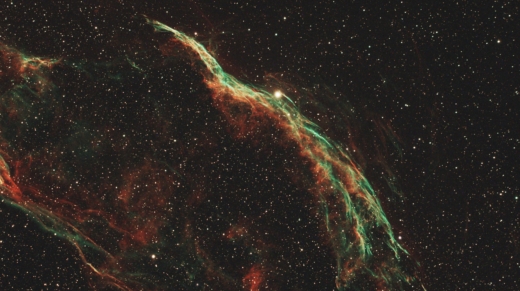
NGC 6960 – Veil nebula, 60 min.
The Western Veil (also known as Caldwell 34), consisting of NGC 6960 (the “Witch’s Broom”, Lacework Nebula, “Filamentary Nebula”) near the foreground star 52 Cygni.

Giant sun spot AR3664, 9 May 2024
Sunspot AR3664 has grown so large, sprawling almost 200,000 km from end to end. It is 15 times wider than Earth and rivals the great Carrington sunspot of 1859.

Moon Rima Hadley in high resolution, 19 March 2024
Moon craters Copernicus and Eratosthenes, Plato with Montes Alpes and Rima Hadley, a sinuous rille located west of the Apollo 15 landing site at 5600 mm focal length.

Sun in white light, 25 February 2024
Giant sunspot group AR3590 is more than ten times wider than Earth and can be safely viewed through ordinary eclipse glasses. Report coming soon.